A Guide to AAC and Communication Devices
Augmentative and alternative communication, usually shortened to AAC, is any tool that helps a person communicate when speech alone is not enough. It covers people who have no speech at all and people whose speech is hard for others to understand, across conditions like cerebral palsy, autism, stroke and motor neurone disease. Good AAC does not replace a person, it gives them a reliable voice, and the right device is the one that fits how they move, see and think today, with room to grow.
Communication devices step up in stages. A single-message device plays one recorded phrase when pressed, perfect for a first taste of cause and effect or for one important message like a greeting. Multi-message devices offer a handful of phrases side by side. Sequencers play a series of messages in order, one press at a time, which suits routines, jokes and stories. Leveled or grid communicators hold many messages across several layers, growing with the user. And tactile communicators use touchable symbols instead of pictures, so they work for people who are blind or have low vision as well as limited speech.
How a person activates the device matters as much as the device itself. Many people press the buttons directly. Others cannot, and use a separate switch, a large button placed wherever they have reliable movement, from a hand to a head. A sip and puff switch lets someone operate a device with breath alone. When you choose, start from the person's most consistent movement and their vision, then pick the number of messages they need now rather than the most a device can hold. Everything below is real equipment we supply, priced in euros.
Our team's picks
Start with one clear message
Big Talk is a large, robust single-message communicator: record a phrase, and one firm press plays it back. The simplest way to introduce cause and effect, or to give someone one reliable message like a greeting or a request.
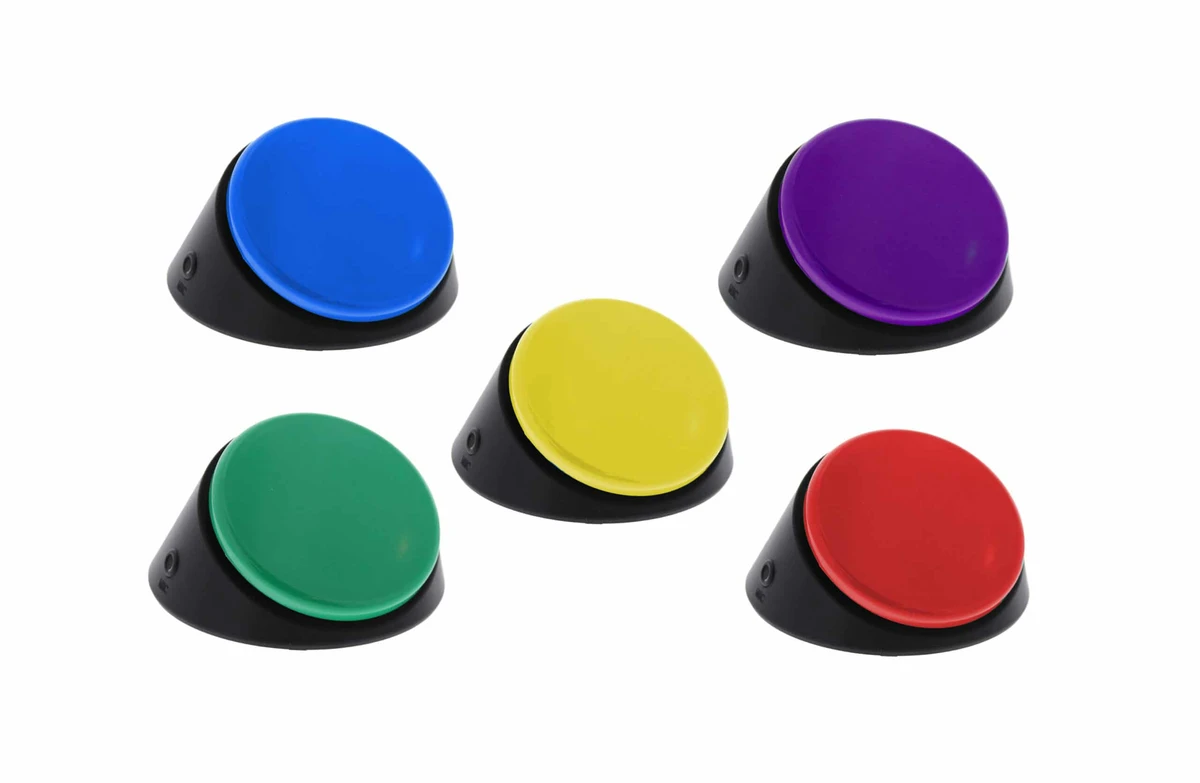
Easy one-message communicator with 20 seconds of recording time, available in five colors.
Price: US$159.83A few messages side by side
The Talkable 4 holds four recorded messages on one device, so a person can choose between a small set of phrases. A natural next step once a single message is mastered, and still simple enough to learn quickly.
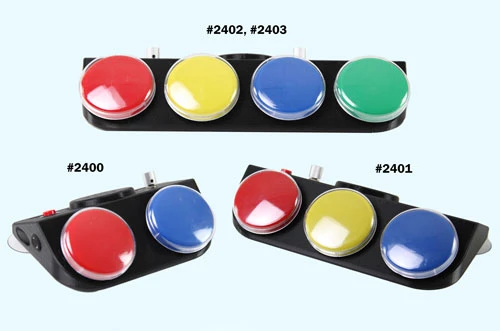
A compact four-message AAC communicator with built-in icon holders and a free clear cover.
Price: US$209.51A four-cell direct-select board
The Cheap Talk 4-Switch Module presents four clear cells for direct selection, with space for symbols or photos above each message. A dependable, affordable classroom communicator for building early vocabulary.
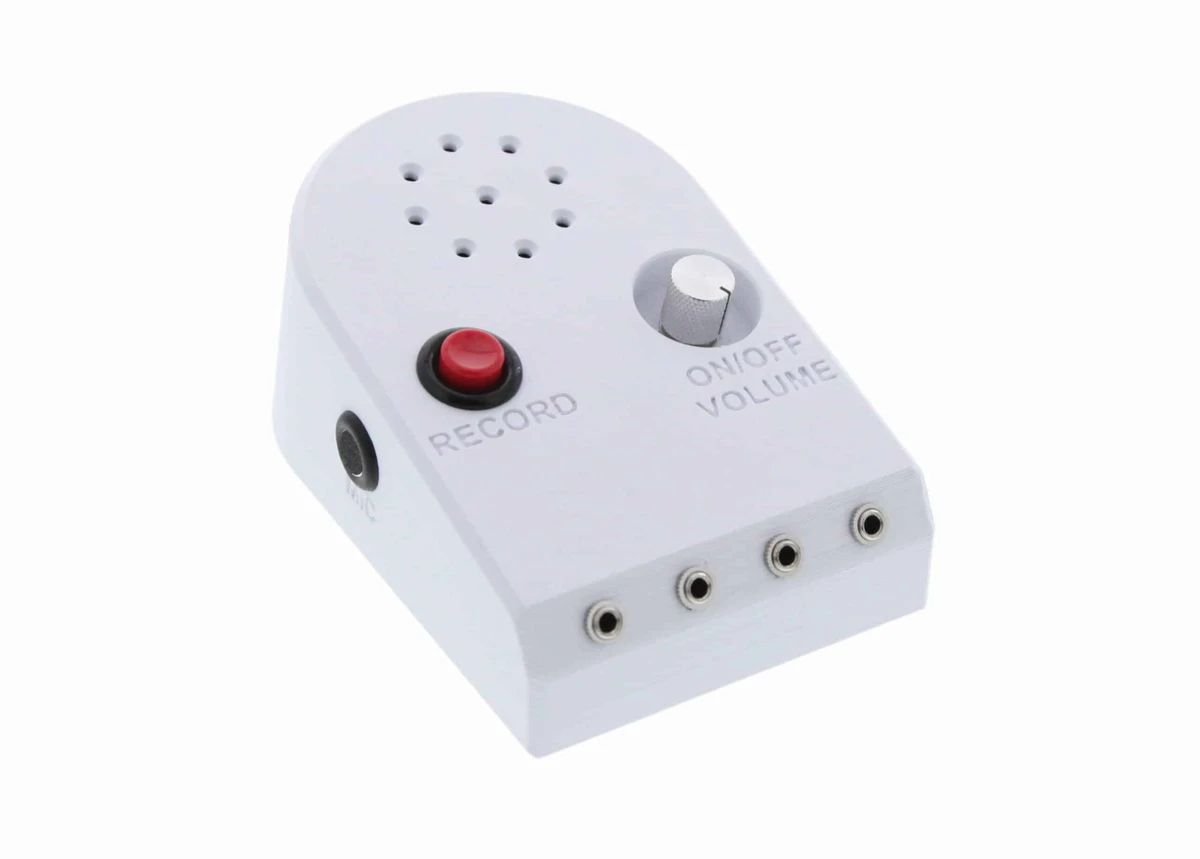
Self-contained recorder-talker module that accepts up to four external switches for four messages.
Price: US$136.07For routines, stories and jokes
The Small Talk Sequencer plays a series of messages in order, one press at a time. Ideal for step-by-step routines, taking part in a story, or delivering the punchline of a joke, all with a single button.
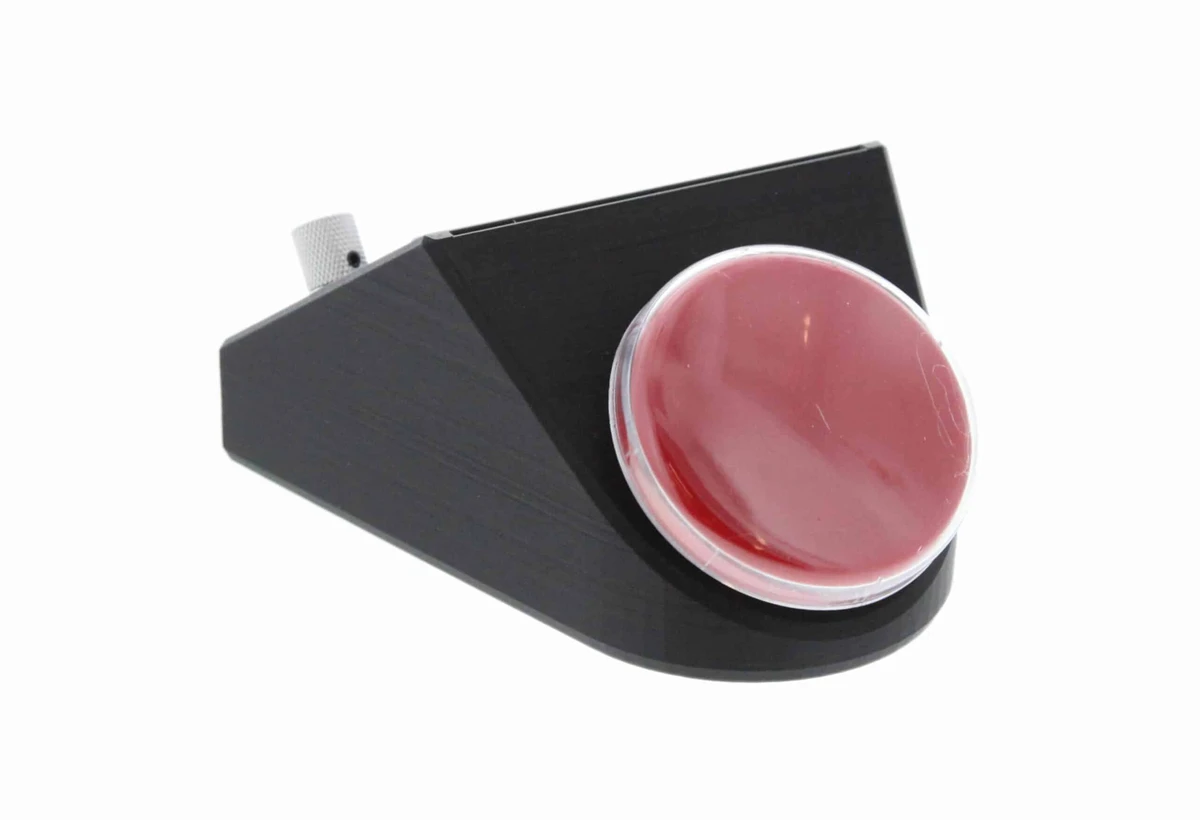
Compact AAC communicator with single, sequential and random message modes, holding up to 250 messages.
Price: US$188.99Grows with the user
The Communication Builder holds many messages across multiple levels, so vocabulary can expand without buying a new device. A strong long-term choice for a user who is ready to move beyond a fixed set of phrases.
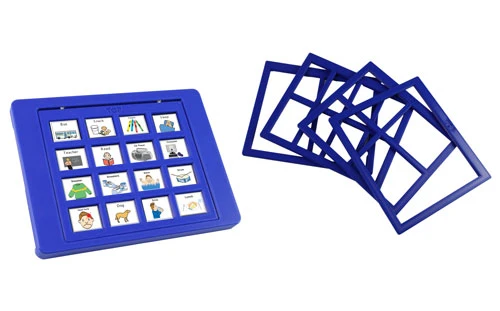
Progressive AAC device with 5 interchangeable frames (1, 2, 4, 8, 16 windows) and 8 minutes of push-button recording.
Price: US$308.87For users who are also blind or low vision
The Totally Tactile Communicator uses touchable objects and symbols instead of pictures, so it works for people who have limited speech and limited sight. The key device for making AAC accessible without relying on vision.
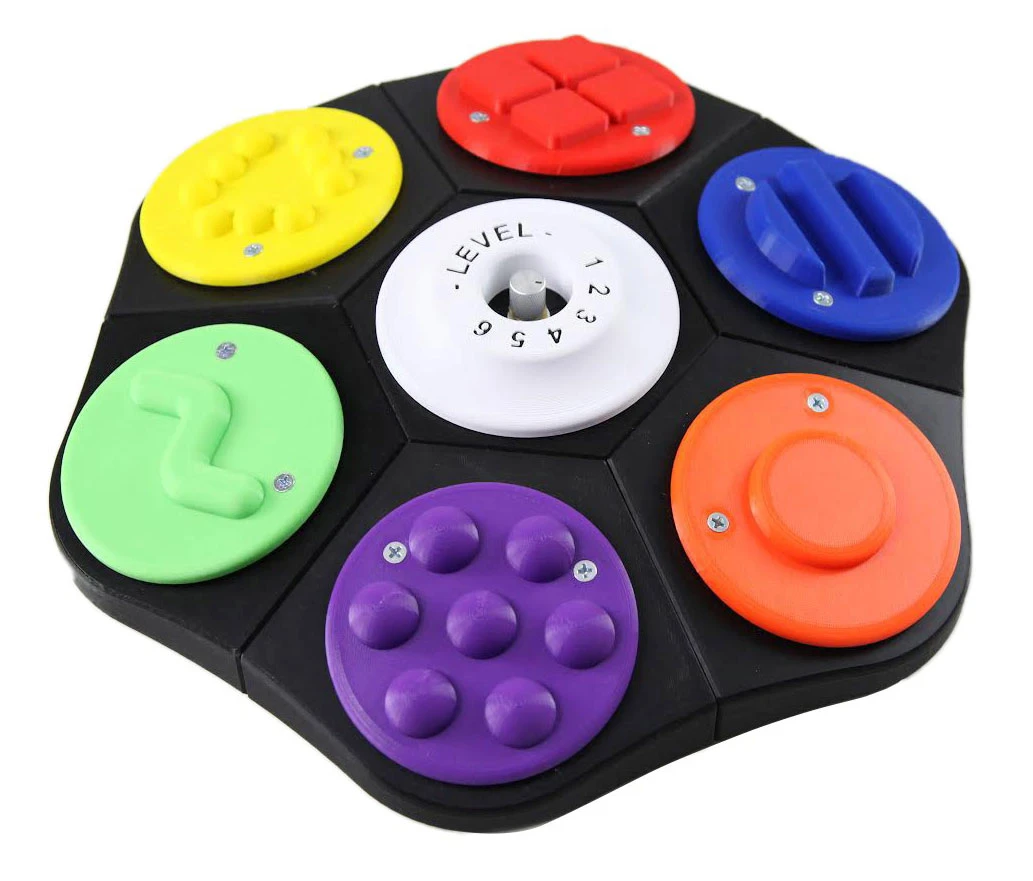
Communicator for visually impaired users with brightly colored, raised-design tactile plates on a rotating base.
Price: US$408.23Operate a device with breath
A sip and puff switch lets someone activate a communicator or toy by sipping or blowing on a tube, using breath control when hand movement is not reliable. Pair it with a device that has a switch socket to open up access.
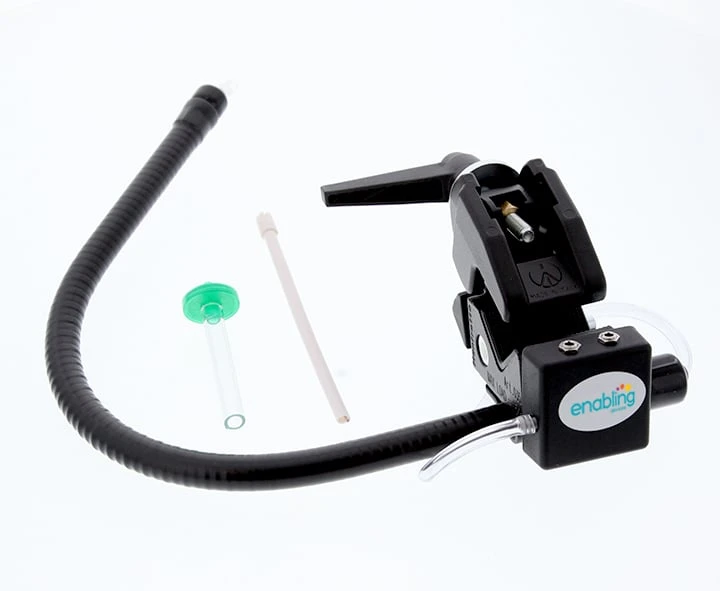
A battery-free oral switch letting people who cannot use touch switches control two devices by sipping or puffing.
Price: US$224.63
Still deciding?
The best device is the one matched to how a person moves, sees and communicates now. Our full communication range has more single-message aids, sequencers, leveled communicators, tactile devices and switches.
Frequently asked questions
What does AAC mean?
AAC stands for augmentative and alternative communication. It covers any method that supports or replaces speech, from simple picture boards and single-message buttons to multi-level electronic communicators. Augmentative means it adds to whatever speech a person has; alternative means it can stand in for speech entirely. The aim is always a reliable voice, not a replacement for the person.
How do I choose the right communicator?
Start with two things: how the person moves most reliably, and how well they see. That tells you whether they can press buttons directly or need a separate switch, and whether they need pictures or touchable tactile symbols. Then choose the number of messages they need right now rather than the maximum a device can hold, since a device with too many cells can overwhelm a new user. You can always step up later.
What is a switch, and when is it needed?
A switch is a large, easy-to-press button that plugs into a communicator or a switch-adapted toy, placed wherever a person has reliable movement, such as a hand, elbow, knee or head. It is needed when someone cannot press the device's own buttons directly. A sip and puff switch goes further, letting a person activate a device using breath alone. The switch becomes their key to the device.
Can someone who is blind use a communication device?
Yes. Tactile communicators use touchable objects and raised symbols instead of on-screen pictures, so a person who is blind or has low vision can find and select messages by touch. This matters for the many people who have both a communication need and a sight condition. The tactile device above is built for exactly this.
Do these devices need programming?
Most of the devices here are record-and-play: you hold a button and speak to record a message, and it plays back when pressed, so anyone can set them up in minutes with no software. Leveled communicators take a little longer to organise across their layers, but still record by voice. Product pages describe how each device is set up, and prices are shown live in euros.