Goalball: The Game and the Gear
Goalball is the flagship team sport for blind and low vision athletes, invented in 1946 and Paralympic since 1976. Two teams of three defend a goal that spans the full width of the court, throwing a heavy ball with bells inside so players locate it by sound. All players wear light-blocking eyeshades, so the game is completely fair regardless of how much sight each person has.
Because everything happens by sound, goalball is played in near silence: spectators stay quiet during play so athletes can hear the ball. The court has tactile lines players feel through the floor to orient themselves.
It is fast, physical and one of the most exciting Paralympic sports to watch and to play.
The essential kit is short: an official ball, eyeshades for fair play and tactile court tape to mark the lines. Below are the pieces we recommend to set up training or a club.
Our team's picks
The official match ball
This IBSA-approved goalball is the regulation ball: heavy, with internal bells so players track it by sound, and holes so the sound carries. The one essential piece of equipment for any goalball session.
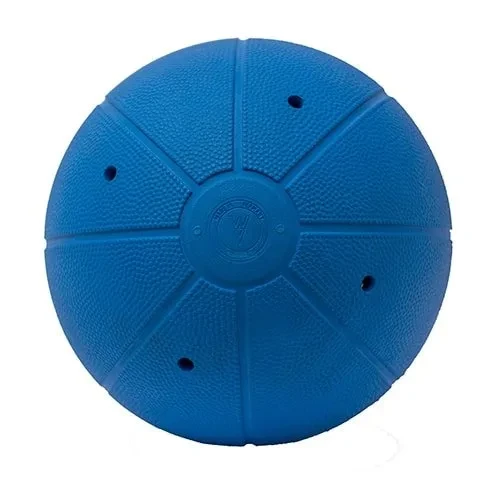
Goalball (Blue Rubber, IBSA)
View ProductVision & BlindnessAdaptive Sports & RecreationBlind & Visually Impaired SportsThe official IBSA-standard goalball: blue rubber, size 7, 1250 g, with internal bells and sound holes for tracking by ear.
Price: US$108.00Eyeshades for fair play
Every goalball player wears light-blocking eyeshades so the game is fair regardless of sight. The Justa Blind Sports Mask is a comfortable, competition-suitable choice for training and matches.
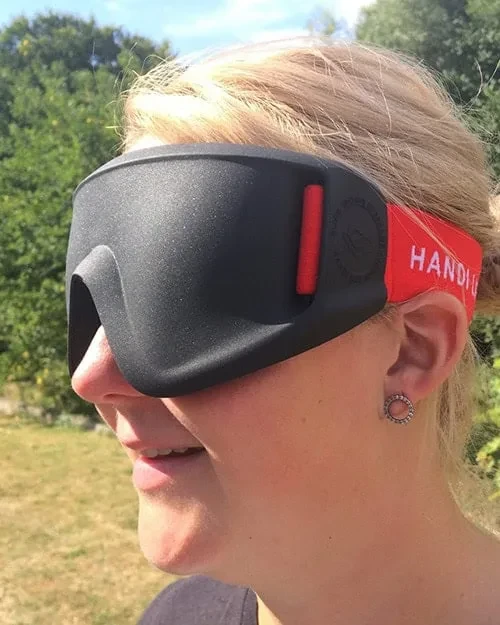
Justa Blind Sports Mask
View ProductVision & BlindnessAdaptive Sports & RecreationBlind & Visually Impaired SportsA professional total-blackout eyeshade in soft moulded rubber, one size with an adjustable strap. Choose a red or blue strap.
Price: US$38.02Mark the tactile court
Goalball lines are raised so players feel them through the floor. This court tape marks a regulation court that athletes can orient to by touch, turning any sports hall into a goalball court.
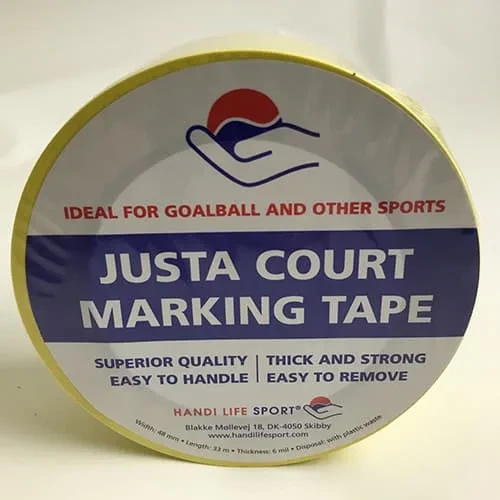
Justa Goalball Court Tape (6 Rolls)
View ProductVision & BlindnessAdaptive Sports & RecreationBlind & Visually Impaired SportsA pack of 6 rolls of strong Justa court-marking tape (48 mm × 33 m) for marking the tactile lines of a goalball court.
Price: US$29.70
Still deciding?
Goalball needs little to get started but rewards good kit. The full adaptive sports range has more balls, eyeshades and court equipment.
Frequently asked questions
How do you play goalball?
Two teams of three try to roll a belled ball into the opponents' goal, which spans the whole court width, while defending their own by listening for the ball and blocking it with their bodies. Everyone wears eyeshades, so it is played entirely by sound and touch.
Do all goalball players wear eyeshades?
Yes. Because sight varies between players, everyone wears light-blocking eyeshades so the game is completely fair. Eyeshades are required equipment at every level, from school sessions to the Paralympics.
What makes a goalball different from a normal ball?
A goalball is heavier than a regular ball and has bells inside plus holes in the surface, so players can hear exactly where it is as it moves. Only a proper belled ball works for the game, which is why an official ball is the first thing to buy.
Why is goalball played in silence?
Players find the ball entirely by sound, so the audience stays quiet during play and cheers between points. That silence is part of what makes goalball such a distinctive and intense sport to watch.